
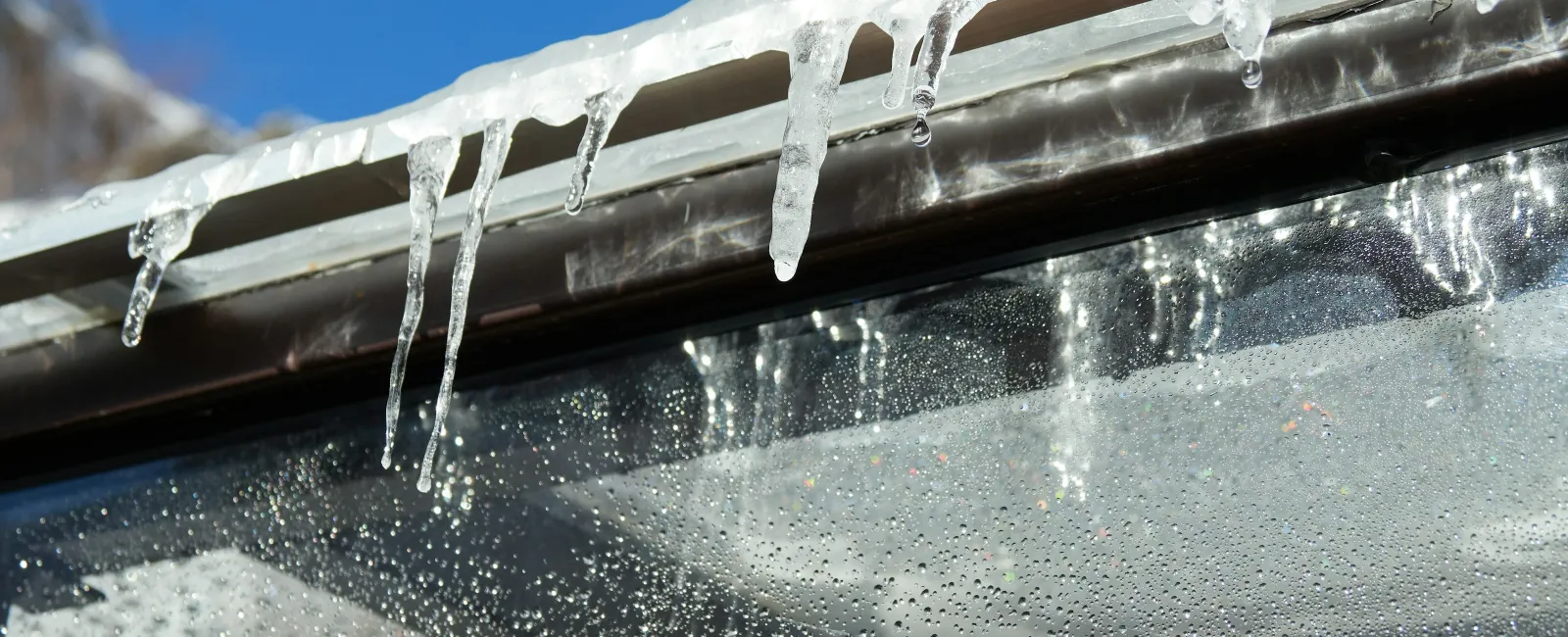
Recent ice storms brought something most Georgia homeowners have never seen: ice dams. Those thick ridges of ice along your roof's edge might look like winter decoration, but they're actually ticking time bombs that can cause thousands of dollars in damage.
If you noticed heavy icicles hanging from your gutters during the storm, water stains appearing on your ceilings, or moisture around your windows, you likely have ice dam damage. The good news? You can take action now to prevent further harm to your home.
What Are Ice Dams and Why Did They Form in Georgia?
Ice dams occur when snow on your roof melts, flows down toward the edge, and refreezes into a solid ridge of ice. This creates a barrier that traps water behind it. With nowhere to go, that water seeps under your shingles and into your home.
Georgia rarely experiences the prolonged freezing temperatures needed for ice dam formation. But last week's combination of heavy snow, freezing rain, and days of temperatures in the teens created perfect conditions. Heat escaping from your attic melted the snow on the upper portions of your roof. When that water reached the colder eaves extending beyond your home's walls, it froze solid.
The result is a dam that grows larger with each freeze-thaw cycle. As temperatures fluctuate this week, the problem compounds. What started as a small ice buildup can quickly become a major structural threat.
Signs You Have Ice Dam Damage
Not all ice dam damage is obvious. Here's what to look for inside and outside your home:
Exterior Warning Signs: Heavy icicles hanging from gutters or roof edges indicate water is refreezing repeatedly. Long icicles reaching toward the ground signal significant ice accumulation. Check for ice or water stains on your exterior walls, particularly below the roof line. Sagging gutters pulled away from the fascia board suggest the weight of ice has stressed your gutter system.
Interior Damage Indicators: Water stains on ceilings, especially near exterior walls, mean water has penetrated your roof. Damp or swollen drywall indicates ongoing moisture intrusion. Peeling paint or bubbling ceiling texture points to water damage behind the surface. In severe cases, you might notice water actively dripping into your attic or living spaces.
The challenge with ice dams is that damage often doesn't appear until after the ice melts. The water trapped behind the dam can sit there for days, slowly seeping through your roof's protective layers. By the time you notice interior damage, the problem has already been occurring for a while.
What Not to Do: Dangerous Ice Dam Removal Methods
Before we discuss safe removal methods, let's cover what you should absolutely avoid. These common approaches cause more harm than good.
Never use a hammer, chisel, or shovel to break up ice dams. Even gentle tapping damages shingles by stripping protective granules and cracking the roofing material. The ice adheres directly to your shingles, so any force you apply transfers directly to the roof.
Avoid using rock salt or standard ice melt products. These chemicals can damage asphalt shingles, void your roof warranty, and kill landscaping below when they run off. The chemical composition is too harsh for roofing materials, especially when left in contact for extended periods.
Don't use a pressure washer. While it might seem logical, pressure washers are far too powerful for residential roofing. At 2,000 to 3,000 PSI, they can slice through shingles like paper. Plus, the last thing your leaking roof needs is five additional gallons of water per minute.
Climbing onto an icy roof is extremely dangerous. Even professionals equipped with proper safety gear approach ice-covered roofs with extreme caution. A fall from a single-story roof can cause life-altering injuries or death.
Safe Steps You Can Take Right Now
If water is actively leaking into your home, you need to act immediately. Place a box fan in your attic and aim it at the underside of the roof where water is entering. The cold air will refreeze the leak temporarily, giving you time to arrange professional help.
From the ground, you can carefully use a roof rake to remove snow from the lower three to five feet of your roof. This eliminates the snow that feeds the ice dam with additional meltwater. Use a rake with wheels on the blade to avoid scraping your shingles directly. Work slowly and leave a thin layer of snow rather than scraping down to bare shingles.
For a temporary drainage solution, you can create channels through the ice dam using lukewarm tap water on a warm day. Work from the bottom edge upward. This allows trapped water to drain off, but understand this is only a short-term fix. The channel will refreeze within days as temperatures drop again tonight and tomorrow.
When to Call a Professional Roofing Company
Some ice dam situations require professional intervention. If you're experiencing active leaks, have extensive ice buildup, or notice structural damage like sagging gutters, contact a professional immediately.
Professional roofers use specialized steam equipment that melts ice without damaging shingles. Unlike pressure washers, professional steamers operate at lower pressure but much higher temperatures, safely removing ice while preserving your roof's integrity.
At EXO Roofing, we understand that ice dams are unfamiliar territory for most Georgia homeowners. Our team has been responding to ice dam emergencies throughout metro Atlanta since last week's storm. We can safely remove ice, assess damage to your roof and gutters, and provide honest guidance on necessary repairs.
Preventing Ice Dams in Future Winter Storms
While ice storms are rare in Georgia, climate patterns are changing. Preparing your roof now can prevent ice dam formation during the next winter weather event.
The root cause of ice dams is heat escaping through your roof. Improving attic insulation and ventilation keeps your roof surface cold and prevents snow from melting prematurely. Ensure your attic has proper ridge and soffit vents that allow cold air to circulate freely. This maintains uniform roof temperature.
Seal air leaks in your attic. Common culprits include recessed lighting fixtures, attic hatches, and gaps around chimneys and plumbing vents. Weather-stripped covers on attic access points prevent warm air from escaping into the attic space.
Make sure bathroom and kitchen exhaust fans vent outside your home, not into the attic. Warm, moist air venting into your attic contributes significantly to uneven roof temperatures that cause ice dams.
For homes prone to ice dam formation, heat cables installed along roof edges can provide protection. These electrically heated cables create drainage channels through ice and snow. They're installed in a zigzag pattern before winter arrives and can be a worthwhile investment if you live in north Georgia, where ice storms occur more frequently.
Don't Wait for More Damage
Ice dams cause millions of dollars in property damage nationwide every winter. In Georgia, where homeowners and contractors have limited experience with these formations, the risk of improper handling is even higher.
If you suspect ice dam damage on your roof, document everything with photos. This documentation is crucial for insurance claims. Look for water stains, measure ice buildup if safely visible from the ground, and photograph any interior damage.
Contact EXO Roofing today for a professional ice dam assessment. Our experienced team can safely evaluate your roof, remove problematic ice buildup, and repair any damage before Georgia's wet spring season arrives. We offer emergency service for active leaks and can typically respond within 24 hours.
Don't let last week's rare ice storm turn into months of expensive repairs. The window for addressing ice dam damage is closing as we move into February. Schedule your inspection now while the evidence is still visible and before spring rains compound the problem.
Contact EXO Roofing or visit our website to request a free ice dam damage assessment. Serving homeowners throughout Georgia with honest, professional roofing services.


