
Hail can leave a roof full of bruised, weakened shingles that look completely normal from the ground. The damage doesn't announce itself until a rainstorm works through those weak spots and a stain shows up on a ceiling, often months after the hail that caused it. In Georgia that gap is wide, because the hail-heavy storms tend to hit in spring while the leaks they cause surface through summer and into fall. That delay between the storm and the symptom is the reason so much hail damage goes unnoticed until it becomes an interior problem.
The fix ranges from replacing a few shingles to redoing the whole roof, and which end you land on depends on the age of the roof and how hard it got hit. Understanding what hail does to a shingle is where the fix starts.
What Hail Actually Does to a Shingle
A hailstone does not usually punch a hole in a shingle. It bruises it. When a stone hits, it fractures the fiberglass mat underneath the surface and knocks the protective granules loose at the point of impact. The granules are what shield the asphalt from the sun, so once they are gone, that spot begins to degrade under Georgia's intense summer UV. The shingle keeps sitting on the roof looking mostly intact while the damaged spot quietly breaks down.
Stone size drives the severity. Pea-sized hail rarely does structural harm, but once stones reach the size of a quarter or larger, they start bruising shingles, cracking older ones, and denting the softer metal components. Wind usually accompanies the hail, so it is common to find hail bruising and wind-lifted or missing shingles on the same roof after a single storm.
Signs of Hail Damage on a Roof
Some hail damage is visible from the ground, but most of it is not, which is why a close inspection matters. The clearest signals fall into a handful of categories worth checking after any significant storm.
Sign |
What it looks like |
What it means |
Bruised shingles |
Soft, dented spots you feel more than see |
Mat damage under the surface, shortens roof life |
Granule loss |
Bare black patches, granules in gutters |
Protective layer knocked off, UV now hits the asphalt |
Cracked shingles |
Splits radiating from an impact point |
Direct hit from larger stones, water entry risk |
Dented metals |
Dimples on vents, flashing, gutters |
Confirms hail size and helps date the storm |
Exposed mat |
Fiberglass showing through the surface |
Advanced damage, repair or replacement needed |
The soft metal surfaces are the most reliable tell. Gutters, downspouts, vent caps, and flashing dent before shingles show obvious damage, so dimples on those surfaces confirm that hail large enough to harm the roof came through. Granules collecting in the gutters and at the base of downspouts are another early sign, and they connect to a broader truth about roof water: once granules are washing off in volume, the shingle surface is breaking down and the water leaving the roof is carrying the roof with it.
Why a Professional Inspection Beats a Ground Check
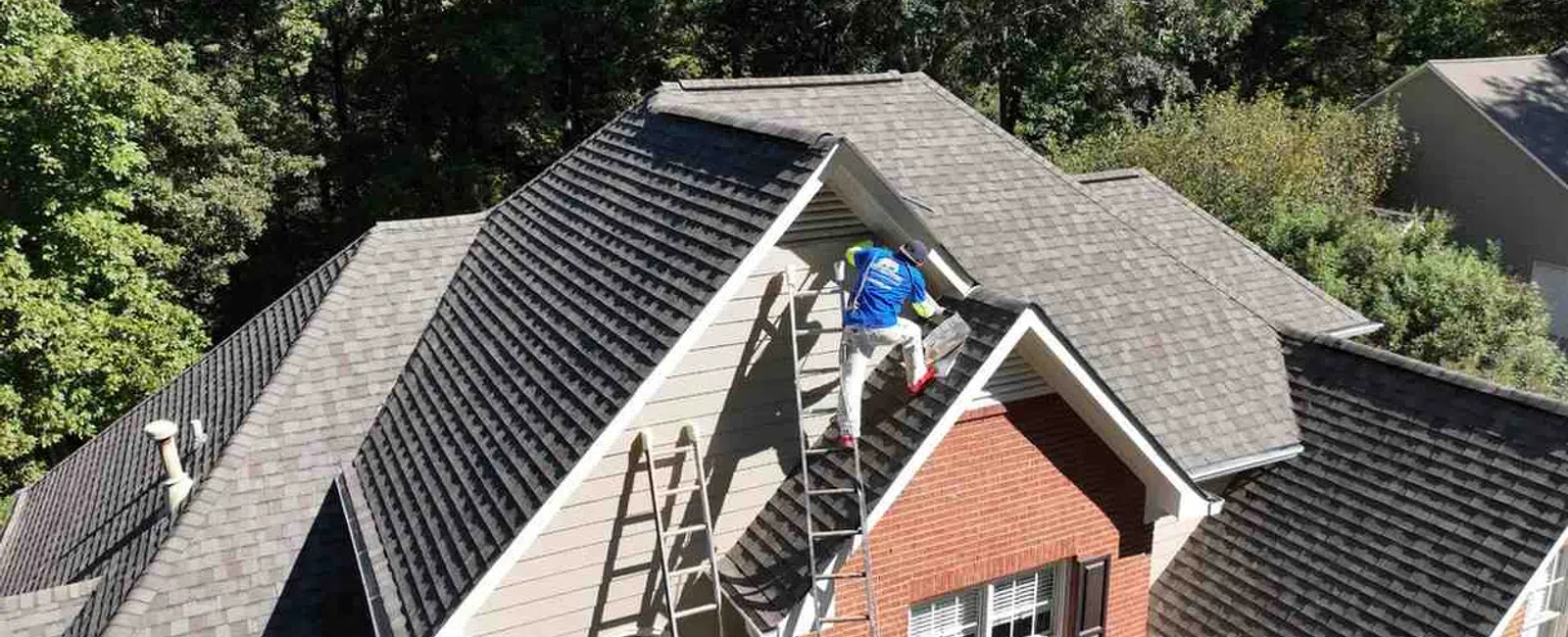
Insurance adjusters and roofers look for a specific pattern of impact marks, and that pattern is hard to read from the ground or even from a ladder at the edge. A proper hail damage roof inspection means walking the roof, checking all slopes because hail often hits one side of the roof harder than the others, and examining the soft metals, the shingle field, and the areas around penetrations. It also means documenting what is found, which is what turns an inspection into something an insurer will act on.
Timing matters in Georgia because of how insurance claims work. Most policies have a window for filing storm claims, and hail damage that goes undocumented for too long can be attributed to age or wear instead of the storm. If a storm has recently come through, it is worth having the roof looked at promptly. The same inspection that catches hail damage often catches the early signs of a roof leak before they reach the interior.
Repair or Replace After Hail
Not every hail-damaged roof needs replacing. The decision comes down to how widespread the damage is and how old the roof already was. Isolated damage on a newer roof, a few cracked shingles or a single hard-hit slope, is often a repair: the affected shingles are replaced and the rest of the roof carries on. Widespread bruising across every slope, especially on a roof already past the halfway point of its lifespan, usually calls for replacement, because patching a roof that is failing everywhere at once buys very little time.
Roof age is the deciding factor as often as damage severity. A ten-year-old roof with granule loss across all slopes has lost service life that a repair cannot restore, and insurers frequently approve a full replacement in that situation. A three-year-old roof with damage confined to one slope is a strong repair candidate. If replacement is the answer, it is worth understanding when a roof replacement makes sense before committing either way.
What to Do After a Hailstorm
The first move after a significant hailstorm is to look for the ground-level evidence that hail was large enough to matter: dents in gutters and downspouts, granules washed into the driveway, dinged window screens or exterior fixtures, and any missing or lifted shingles visible from the yard. That evidence tells you whether a roof inspection is warranted. From there, a documented inspection establishes what the storm did, and that documentation is what supports both the repair and any insurance claim that follows.
Storm rolled through your neighborhood?
The sooner hail damage gets documented, the easier it is to deal with, both for the repair and for any insurance claim. EXOVATIONS is a GAF Master Elite roofing contractor serving metro Atlanta, and an inspection puts someone on the roof to check the slopes, flashing, and shingles that a ground look always misses. Have the roof checked while the damage is fresh, or start with a quick repair quote.


