
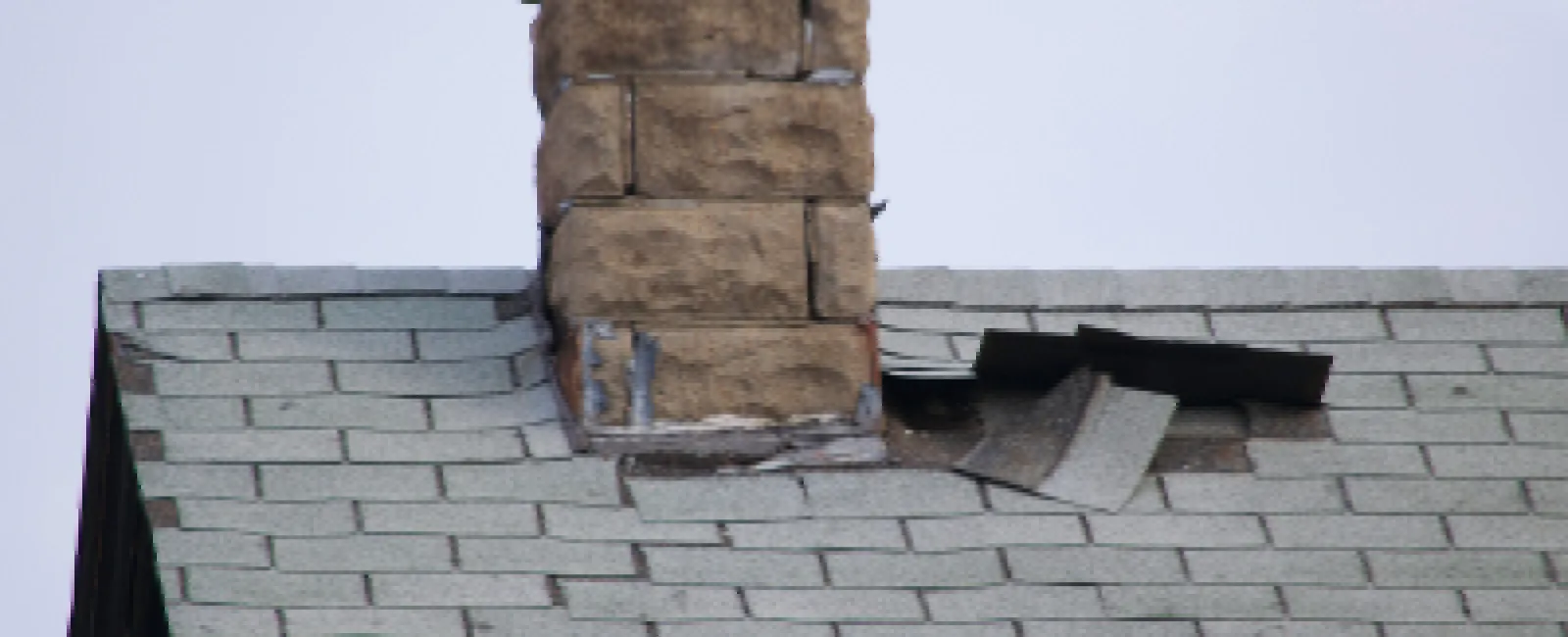
Wind does not have to reach hurricane strength to damage an asphalt shingle roof. The straight-line winds and downbursts that come with ordinary Georgia thunderstorms regularly gust past 50 miles per hour which is enough to break the adhesive seal that holds shingles down. Once that seal breaks, the shingle can lift, flex, and tear, and the roof loses its defense against water even when nothing looks wrong from the yard.
Wind damage roof repair depends on how the shingles failed and how many are affected. A roof can lose a few shingles along one ridge, or it can have broken seals across an entire slope that will not survive the next storm. What the fix looks like starts with understanding how wind lifts a shingle in the first place.
How Wind Damages a Shingle Roof
Asphalt shingles are held down two ways: by the nails that fasten them to the deck and by a strip of adhesive sealant that bonds each shingle to the one below it. Wind damage almost always starts with that seal. A strong gust gets under the leading edge of a shingle, lifts it, and breaks the adhesive bond. Sometimes the shingle tears off completely. More often it flexes back and lays down again, which is why the damage is so easy to miss: the shingle looks fine but the seal underneath is broken.
A broken seal leaves a horizontal crease across the shingle, and that crease is a weak line where the shingle will crack and admit water over time. It also leaves the shingle free to catch the wind again, so a slope with broken seals tends to lose more shingles with each storm. Wind damage concentrates along the edges of the roof, the ridges, rakes, and eaves, and around anything that interrupts the roof plane, because those are the spots where wind pressure is highest.
Signs of Wind Damage on a Roof
Some wind damage is easy to spot, like shingles scattered in the yard after a storm. Most of it is more subtle though, and it is worth checking the roof after any storm that brought strong wind. The signs fall into a handful of categories.
| Sign | Where to look | What it means |
|---|---|---|
| Missing shingles | Bare spots, often along ridges and rakes | Wind broke the seal and peeled shingles off |
| Creased shingles | Horizontal fold line across the shingle | Shingle lifted and flexed, seal is broken even if it laid back down |
| Lifted or curled edges | Shingle corners no longer lying flat | Seal strip failed, next gust can take them |
| Debris impact | Dents or punctures from branches | Direct hits that break the surface |
| Displaced flashing | Loose or bent metal at walls and penetrations | Wind worked the flashing loose, a common leak point |
Missing shingles are the clearest sign, but creased and lifted shingles matter just as much. A broken seal is a future leak whether or not the shingle is still on the roof. Loose or displaced flashing is another one to watch, since wind commonly works metal loose at walls, chimneys, and vents, and those areas are where leaks start. Pieces of shingle, along with granules washed loose by the same storm, often collect in the gutters and at the base of the downspouts, which is one more place the damage shows up.
Why Wind Damage Turns Into Leaks
A roof does not need a missing shingle to leak, a broken seal is enough. Once the adhesive bond is gone, wind driven rain can be pushed up and under the shingle, past the point the shingle was designed to shed water. The underlayment beneath provides a second layer of defense, but underlayment is a backup, not a permanent water barrier, and it fails faster once it is exposed to repeated wetting.
Repair or Replace After Wind
Most wind damage is repairable. When a storm takes shingles off one slope or breaks the seals in a limited area, a roofer can replace the affected shingles and reseal the surrounding ones, and the rest of the roof carries on. The repair is straightforward as long as matching shingles are available, which is easier on newer roofs and harder on older ones where the color has faded or the product has been discontinued.
Replacement should start to be considered when damage is widespread or the roof was already near the end of its life. Wind damage is also different from the everyday causes behind shingles falling off a roof, which are worth telling apart so the fix addresses the real cause.
What to Do After a Windstorm
The first step after a strong windstorm is a ground-level check for the clear evidence: shingles or pieces of shingle in the yard, granules washed into the driveway, bare spots visible on the roof, and any loose or hanging flashing. That evidence signals whether a closer inspection is needed. From there, a documented roof inspection establishes what the storm did and where the seals are broken, and that documentation supports both the repair and any insurance claim that follows. Georgia policies generally have a filing window for storm damage, so damage documented soon after the storm is easier to attribute to that event. The same inspection often catches the early signs of a roof leak before they show up on a ceiling.
Frequently Asked Questions
Can wind damage to a roof be repaired?
Usually, yes. When wind takes shingles off a limited area or breaks the seals on part of the roof, a roofer can replace the damaged shingles and reseal the surrounding ones without redoing the whole roof. Widespread damage, or damage on an aging roof where shingles no longer match, points more toward replacement.
What does wind damage look like on a roof?
The most common signs are missing shingles, especially along ridges and edges, and shingles with a horizontal crease from being lifted and folded back. Curled or lifted edges, dented or punctured shingles from flying debris, and loose flashing are also signs. Much of it is subtle, since a shingle with a broken seal can lay back down and look normal.
Does homeowners insurance cover wind damage to a roof?
Most homeowners policies cover sudden wind damage, though terms and deductibles vary, and some policies in high-wind regions carry separate wind deductibles. Claims typically require documentation and are subject to a filing window after the storm. Check your specific policy for the coverage and deadlines that apply to your home.
How much wind is needed to damage a roof?
Damage can begin at lower speeds than most people expect. Gusts in the 45 to 55 mile per hour range, common in Georgia thunderstorms, are enough to break shingle seals and lift shingles, particularly on older roofs or where shingles were not sealed well to begin with. Stronger gusts tear shingles off outright.
Lost shingles after the last storm?
A broken seal isn't always visible from the ground, and one gap is enough to let water in. EXOVATIONS is a GAF Master Elite roofing contractor serving metro Atlanta, and a close inspection catches lifted and creased shingles before the next storm finishes the job. Get the roof looked at, or pull a repair estimate in minutes with the online tool.
Book a roof inspection or Get an instant quote today!


