
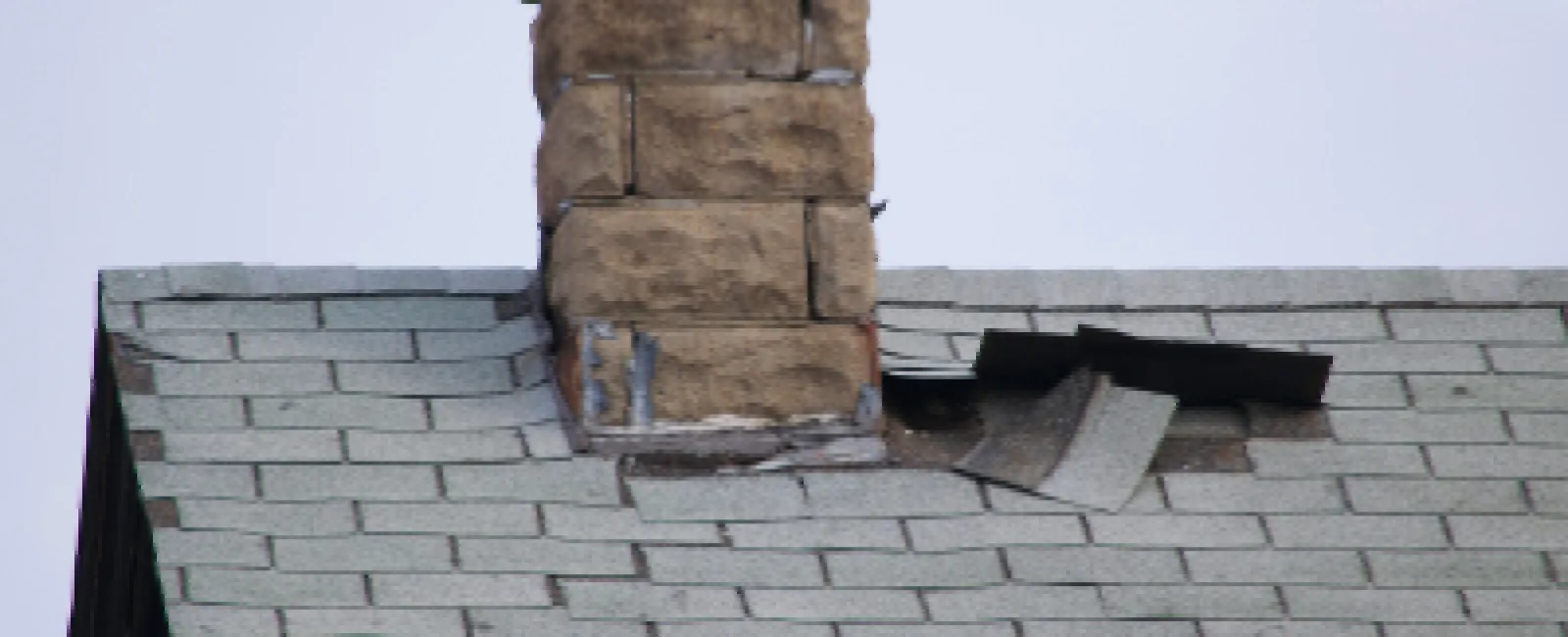
Finding shingles in your yard after a storm is concerning, and as a homeowner, you need to understand what's happening and how to address it quickly.
Primary Causes of Falling Roof Shingles
- Wind Damage
- Wind Damage
Wind is the leading cause of shingle loss. High winds lift shingle edges and break the adhesive seal holding them in place. Modern architectural shingles typically withstand winds up to 130 mph, but compromised or aging shingles can fail at much lower speeds. Shingles on roof edges, corners, and peaks are most vulnerable due to the wind getting underneath them easily.
- Improper Installation
- Improper Installation
Installation errors create weak points in your roofing system. Common mistakes include nails placed too high on the shingle strip, inadequate adhesive application, or misaligned shingles. These problems may not appear immediately but can cause premature shingle failure even on newer roofs.
- Age and Weathering
- Age and Weathering
Asphalt shingles typically last 20 to 30 years. Over time, UV exposure and temperature cycling dry out the asphalt and weaken adhesive bonds. Shingles become brittle, crack more easily, and lose their ability to remain secure during normal weather conditions.
- Poor Attic Ventilation
- Poor Attic Ventilation
Inadequate attic ventilation causes heat and moisture buildup beneath your roof. This excessive heat bakes shingles from underneath, making them brittle and prone to failure. Poor ventilation can also warp or rot the roof deck, compromising shingle attachment.
- Storm Damage
- Storm Damage
Falling debris, like tree branches, can knock shingles loose or crack them. Hail typically doesn't remove shingles directly but creates bruises and cracks that weaken them, leading to failure during subsequent weather events.
Will One Shingle Falling Off Cause a Leak?
A single missing shingle doesn't guarantee immediate leaking. Your roof has underlayment that provides backup protection. However, exposed areas allow water to reach vulnerable spots, potentially causing leaks, mold growth, and deck deterioration over time. The risk increases with each rain event, making prompt repair essential.
What to Do When Shingles Fall Off
1. Document the Damage
Take photos from the ground showing missing shingles, visible damage, and any debris. Note the date and weather conditions. Use binoculars if needed. Do not climb on your roof.
2. Schedule a Professional Inspection
A qualified roofing contractor will assess the extent of damage, check for underlying issues, and inspect your attic for water intrusion. They can determine whether you need simple repairs or more extensive work.
3. Contact Your Insurance Company
If storm damage is involved, report it promptly. Provide documentation and follow their claims process.
4. Make Timely Repairs
Whether replacing a few shingles or addressing larger issues, prompt repairs prevent minor problems from becoming major damage. Water infiltration accelerates once it starts.
Prevention and Maintenance
Regular roof inspections are your best defense against shingle failure. Have your roof professionally inspected annually and after severe weather events. Keep gutters clean, trim overhanging branches, and watch for warning signs like granule loss, curling shingles, or dark patches.
Get Professional Help
If you're dealing with missing shingles or concerns about your roof's condition, don't wait for small problems to become expensive repairs. At EXOroofing, we provide thorough inspections, honest assessments, and quality repairs for Atlanta-area homeowners.
Contact us today for a professional evaluation of your roof. We'll identify any issues, explain your options clearly, and help you protect your home properly.


