
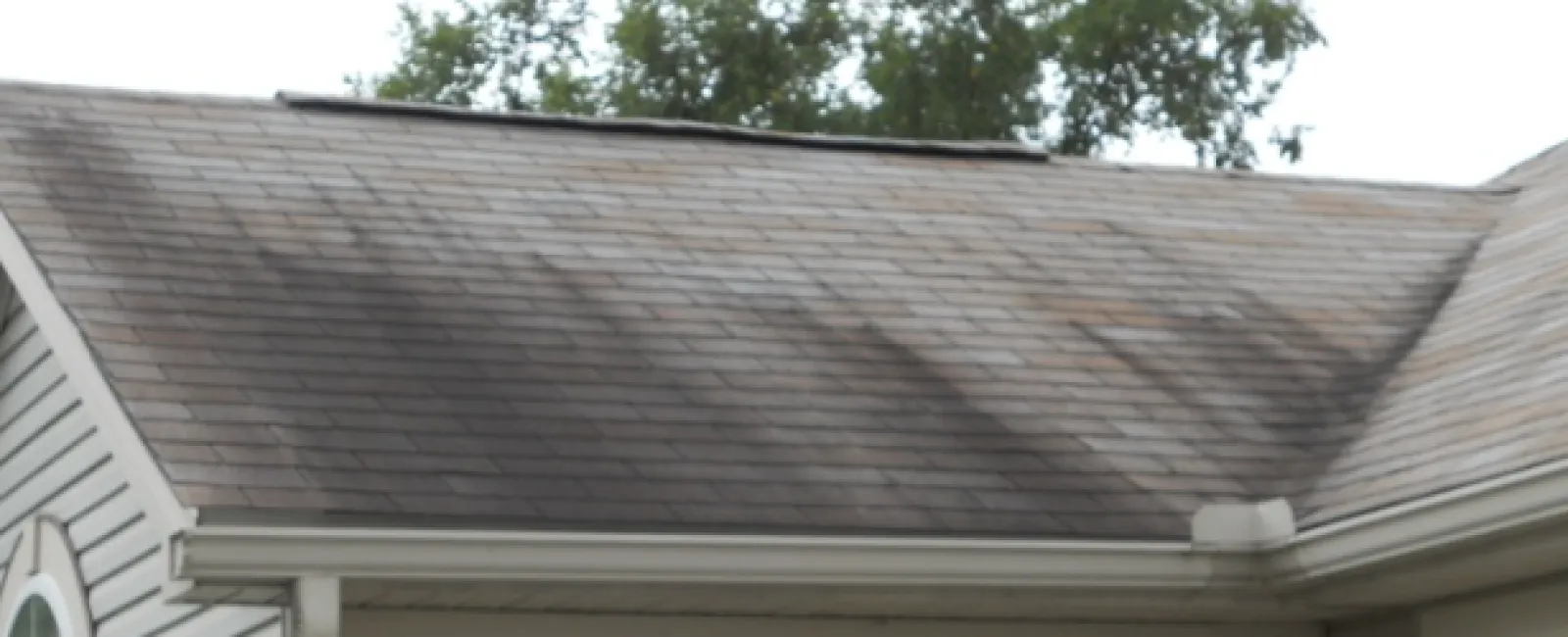
Black streaks on a roof are caused by a hardy airborne bacteria called Gloeocapsa magma, a blue-green algae that feeds on the limestone filler in asphalt shingles and leaves behind dark, vertical staining. While the discoloration is primarily a cosmetic concern rather than a structural one, untreated algae growth can spread across the entire roof plane, reduce curb appeal, and lower perceived home value. Algae-resistant shingles, proper attic ventilation, and periodic professional cleaning are the most effective long-term solutions.
Understanding Black Streaks and Roof Algae
Those dark, dirty-looking streaks running down asphalt shingles are not soot, dirt, or runoff from tree debris. They are colonies of living bacteria that have established themselves on the roof surface. Gloeocapsa magma thrives in warm, humid climates and spreads through airborne spores that travel from rooftop to rooftop, which is why one home in a neighborhood often shows staining shortly after a neighbor's roof develops the same problem.
The algae feed on the calcium carbonate (limestone) filler used in standard asphalt shingles. As the colony grows, it produces a dark protective sheath to shield itself from ultraviolet light. That dark coating is what homeowners actually see as black or brown streaking. Because gravity pulls moisture and spores downward, the stains almost always appear in vertical patterns that flow down the roof slope.
As a GAF Master Elite Residential Roofing Contractor, EXOVATIONS® has inspected thousands of roofs since 1996, and roof algae remains one of the most common cosmetic issues homeowners ask about, particularly on north-facing slopes that stay shaded and damp longer than other sections of the roof.
Why North-Facing Slopes Are Affected First
Algae need three things to flourish: moisture, organic material to feed on, and limited direct sunlight. North-facing slopes receive less direct sunlight, and morning dew and rainfall linger longer on those surfaces. Sections of the roof shaded by tall trees, dormers, or chimneys also tend to develop streaks earlier than fully exposed areas. Homeowners who notice staining on only one side of the roof can usually trace it back to shade patterns and prolonged surface moisture.
Are Black Streaks on a Roof Harmful?
The short answer is that algae staining is mostly an aesthetic problem, but ignoring it in the long term is not a good idea. The bacteria themselves do not eat through asphalt or compromise the waterproofing layer of a shingle. However, heavy algae colonies can hold moisture against the roof surface for longer periods, and where algae thrives, moss and lichen often follow. Moss is a different organism entirely, and unlike algae, it can lift shingle edges, trap water underneath, and accelerate granule loss.
A roof covered in dark streaks can also reduce a home's energy efficiency. Lighter-colored roofs reflect more solar radiation, while algae-darkened surfaces absorb additional heat, which can push attic temperatures higher and increase cooling costs during summer months. From a real estate standpoint, a streaked roof often signals neglect to potential buyers, even when the underlying roof system is in excellent condition.
Cosmetic Concerns Versus Structural Damage
Distinguishing between cosmetic staining and actual shingle deterioration is important. Algae alone rarely shortens the functional lifespan of a quality asphalt shingle. Granule loss, curling edges, cracked tabs, or exposed asphalt are signs of true wear and require a different response than algae cleaning. A professional inspection can clarify which roof category it falls into and whether cleaning, repair, or replacement is the appropriate path forward.
How to Remove Black Streaks From an Asphalt Shingle Roof
Removing existing algae stains requires care. Aggressive cleaning methods can do more damage than the algae ever would. Here is what works and what to avoid.
Safe Cleaning Methods
The most widely accepted method involves applying a diluted solution of sodium hypochlorite (chlorine bleach) and water at roughly a 1:1 ratio. The solution is applied with a low-pressure sprayer, allowed to dwell on the roof for fifteen to twenty minutes, and then rinsed thoroughly with low-pressure water. Surrounding landscaping should be saturated with plain water before and after the application to dilute any runoff and protect plants.
Specialty roof-cleaning chemicals are also available, and some are formulated to be gentler on surrounding vegetation while still killing the algae colony at its root. Whichever solution is used, the goal is to kill the bacteria without disturbing the protective granules embedded in the shingle surface.
What Never to Do
Pressure washing an asphalt shingle roof is one of the most damaging things a homeowner can do. The high-pressure stream strips the ceramic-coated granules that protect the asphalt from ultraviolet light, dramatically shortening the shingles' lifespan. Scrubbing with stiff brushes causes the same problem.
Climbing onto a wet, sloped roof is also extremely dangerous. Wet algae is slippery, and falls from roofs are among the most common causes of serious home-improvement injuries. Professional roof cleaning is almost always the safer and more cost-effective option, especially on steeper pitches or multi-story homes.
Algae-Resistant Shingles and How They Work
Modern algae-resistant (AR) shingles are engineered to suppress Gloeocapsa magma growth before it can take hold. The technology was inspired by an observation made decades ago: roofers noticed that the area directly below copper flashing or galvanized vents rarely developed algae streaks. As rain washed over those metals, trace amounts of copper or zinc ions traveled down the roof and killed the bacteria on contact.
Shingle manufacturers translated that insight into modern AR technology by embedding copper-coated mineral granules into the shingle surface. As rainwater contacts the granules, small amounts of copper ions are released across the roof, creating an inhospitable environment for algae growth. Premium algae-resistant shingles are warranted against streaking for periods ranging from ten to twenty-five years, depending on the manufacturer and product line. See our Roofing Warranties for more details.
For homeowners replacing a roof, choosing an algae-resistant shingle is one of the simplest decisions. The cost difference between standard and AR shingles is generally minimal, and the long-term aesthetic and resale benefits far outweigh the modest upfront investment.
Color Choices and Algae Visibility
Lighter shingle colors tend to show algae streaking more dramatically than darker ones. A weathered wood, driftwood, or pebble gray shingle will reveal even modest staining, while charcoal, slate, and deep brown tones often mask early algae growth. This does not mean dark roofs are immune, only that the contrast is less obvious. Homeowners particularly concerned with curb appeal sometimes opt for darker AR shingles to combine both forms of protection. For guidance, check out our Roof Color Guide for Georgia Homeowners.
Preventing Algae Growth on Your Roof
Prevention is far easier and less expensive than remediation. A few simple practices significantly reduce the chance of algae taking hold on a roof.
Landscaping and Maintenance Habits
Trimming back overhanging tree branches is one of the most effective preventative steps. Branches shade the roof, drop debris that holds moisture, and create the exact conditions that allow algae to thrive. Allowing more sunlight to reach the roof surface keeps shingles drier and less hospitable to bacterial growth. Keeping gutters clean also matters, as clogged gutters can cause water to back up under shingle edges and along fascia boards, prolonging moisture exposure. Learn How Do Clogged Gutters Affect My Roof?
Zinc and Copper Strips
Installing zinc or copper strips along the roof's ridge line provides ongoing algae protection. Each rainfall washes a small amount of metal ions down the slope, killing algae before it can establish a colony. This is a low-cost retrofit that pairs well with both standard and algae-resistant shingles, particularly on older roofs where AR technology was not originally specified.
Attic Ventilation
Proper attic ventilation also plays a role. A well-ventilated attic keeps the underside of the roof deck dry, which reduces the overall moisture load on the shingles above. Roofs that retain heat and humidity create conditions favorable to algae, moss, and premature shingle aging. Read more about What Is a Ridge Vent and Why It Is Used on Residential Roofs.
When to Call a Professional Roofer
Homeowners who notice extensive streaking, moss colonies, lifted shingles, or granule loss in gutters should schedule a professional roof inspection. Algae itself is not an emergency, but the conditions that allow algae to flourish often indicate other issues worth examining, including ventilation problems, aging shingles, or compromised flashing.
EXOVATIONS® has been a trusted name in residential roofing since 1996, and our status as a GAF Master Elite Residential Roofing Contractor places us among fewer than three percent of all roofing contractors in North America to earn that designation. Whether the issue is cosmetic algae staining or a roof nearing the end of its service life, a professional evaluation provides clarity on the right next steps.


