
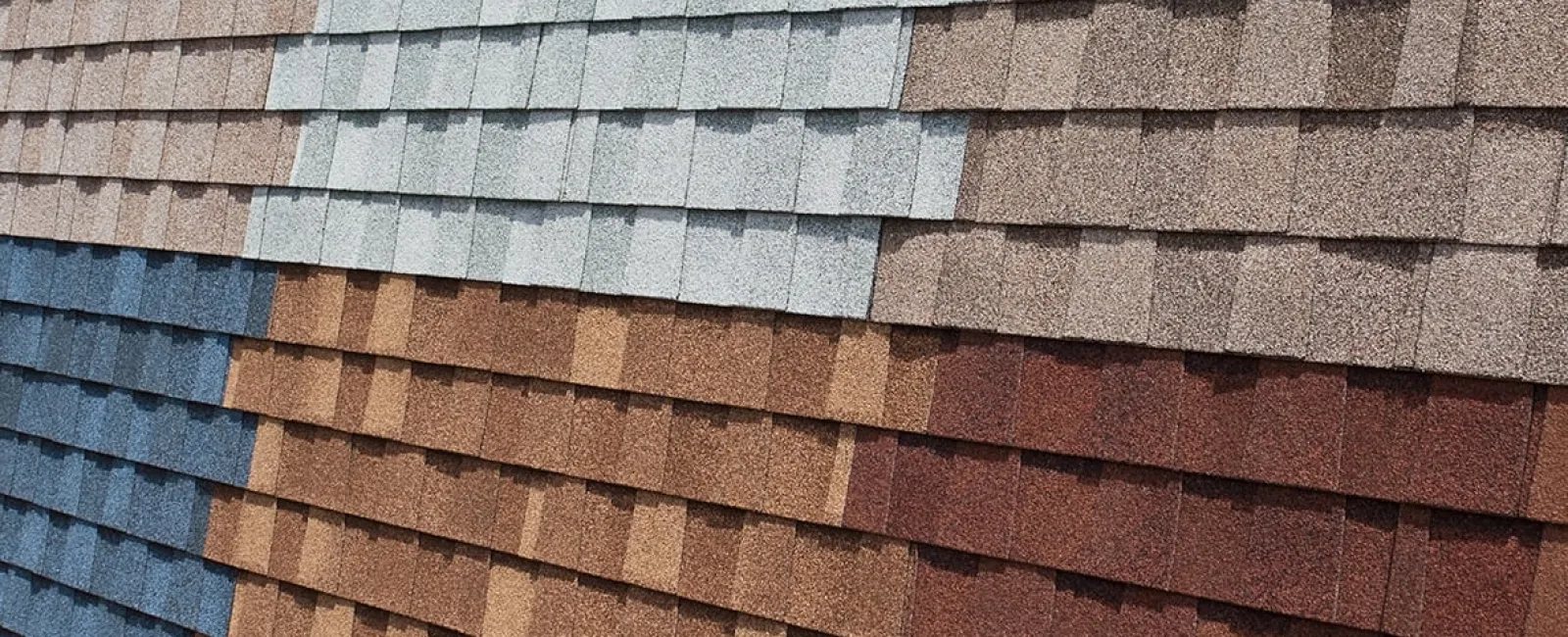
You're in the shingle showroom with samples of shingles in hand, and everything looks great. Your wife holds up a sample of gray. "Does this match our brick?" Look at 30 grays. They're different, but you never noticed.
This is where most Georgia homeowners get stuck. The roof accounts for about 40% of the home's exterior and lasts 25 to 30 years. That's a big decision, but the good news is that picking a roof color is not that hard.
After 28 years helping Atlanta-area homeowners make this exact choice, we've learned that the best roof color isn't a trend. It's the combination that works best for your home, your climate, and your personal satisfaction, every time you pull into your driveway.
Why Roof Color Actually Matters
The roof is the main visual of your home. It's what most people see when they drive by or look at a picture. Color's impact goes beyond mere appearance.
Light roofs reflect sunlight. Dark roofs absorb sunlight. During Georgia summers, the two differ by $300 to $500 per year. That's real money over 25 years.
UV rays in Georgia make darker colors fade faster. Gray shingles do not fade quickly on a roof in Georgia.
Black algae: The humidity and shade in Georgia's climate cause black algae streaks to form on roofs. These stains are hidden better by lighter colors than darker colors.
Resale: Roofing color has the least impact on resale value when it complements the home's architectural style; otherwise, it can be jarring before a buyer enters.
Cool Tones vs. Warm Tones: The Foundation
Think about the exterior of your home being warm or cool before choosing any shade.
Cool shades of blue, green, and purple are compatible with white or light gray siding, blue-gray stone, and modern architecture.
Warm colors, such as red, orange, and yellow, go well with brick, tan siding, stone, and customary architecture.
White or gray neutral wildcards may be paired with either palette. A gray with blue undertones clashes with a warm brick. A gray with yellow undertones does the opposite.
Consider this your first decision: Does the exterior of your home trend cool or warm? Look at your brick, siding, or trim. Get a photo and consult with the contractor.
The Colors That Work Best in Georgia
Gray and Charcoal
Why it works: Gray reflects heat, stays cleaner, and ages better in Georgia's sun. Today, charcoals with blends of granules with several colors are popular among consumers.
Best for: Almost any home style. Light gray pairs well with white or cream siding. Medium grays work with brick, and blue grays add sophistication to stone.
Real-world: You'll see gray on old brick homes in Marietta, new farmhouses in Alpharetta, and everything else in between. It is reliable, timeless and still feels fresh.
Black and Deep Charcoal
Why it works: Bold and edgy, high contrast. Modern charcoal blends solve the pure-black problem: they absorb less heat and fade less.
Best for: Homes with light siding or white trim. Modern homes. Any home could use a finishing punctuation mark.
Honest answer: Pure black absorbs extra heat, costing $300+/year to cool, and fades dramatically in the Georgia sun around year 8-10. Charcoals perform better in this situation.
Warm Browns
Why it works: Warm, natural, blends with landscaping. Multi-colored blends hide staining better than solid colors, especially at Georgia State during pollen season.
Best for: Craftsman, wood-sided, or homes surrounded by trees. Brick homes with warm colors for a warm-on-warm harmony.
The honest part: Doesn't reflect heat like gray so cooling costs may be slightly higher, but warm tones fit Georgia's older neighborhoods best.
Trending: Deep Plum and Blue-Gray Slate
Deep plum (purple-gray) is hitting the sweet spot for Georgia homeowners. It's dark enough to feel intentional but neutral enough to work with traditional homes. Deep-looking blue-gray slate blends add more depth.
The real conversation: Before you pick a trend color, go check out homes with that color in your neighborhood. Check in different light. If you don't see examples in your neighborhood, that's telling you.
Georgia's Climate: The Hidden Factor
National roof guides ignore this; the colors that look good and last in Georgia's climate may not look good elsewhere.
Algae and Moss Growth
Moss and algae streak because the high humidity, shade, and frequent rain create a breeding ground for black algae to leave streaks on your roof. These stains can age your roof, making it look dirty and old years before its expected lifespan ends. This is not the case with dark colors. If your home is beneath trees (as most of Atlanta's is) ask your contractor if they have algae-resistant granule treatments. A minor upgrade that has big payoff.
Extreme Ultraviolet Radiation
The Georgia sun in summer is stronger and dark colors fade. Jet-black will look good on day one, but by year eight it will have faded. Dark charcoals are more resistant. Grays age best.
Temperature and Humidity Fluctuations
The freeze-and-thaw cycles of winter and the afternoon thunderstorms of summer mean roofs expand and contract much more than in more stable climates. Quality matters as much in degree as color.
In short: In GA, use medium to light colors to hide algae stains and to fade evenly. Dark colors need washing every 10 years and will start to look old around years 15-20. That is not bad. It is just reality.
Colors by Exterior Material
Red or Warm-Tone Brick Homes
Best choices: Medium gray, charcoal blends, or warm brown with copper.
Why: Red brick has a warm undertone and a cool roof is a more advanced contrast. A warm roof mixes. Either approach remains a personal choice.
Pro tip: For best results, check whether the bricks match. Go to your front yard at 4 pm. Hold the sample brick against the brick. Note how it feels in the slanting light. Fighting for attention, or meant to be together?
Tan, Cream, or White Siding
Best choices: Black, charcoal, medium gray and even plum.
Why: Light siding is very neutral, meaning you can choose a much bolder roof color without overwhelming the home.
Pro tip: This is where you can afford to be adventurous.
Gray Siding or Stone Accents
Best choices: Almost any shade from charcoal to medium gray to blue-gray.
Why: Gray is truly neutral.
Pro tip: If your siding has a warm-gray overtone, use a warm roof; if it has a cool-gray overtone, select a cool roof to avoid subtle visual discord.
Energy Costs and Resale Value
Energy: Lighter roofs reflect 10-15% more sunlight compared to dark roofs. This can save $300-500 per year in cooling costs for each house in Georgia. That amount is $ 7,500 to $ 12,500 over 25 years. This is real money.
When reselling, a roof color that blends with your house architecture is best because good architecture is integrative, and home buyers feel uncomfortable with a mismatch. That's the real risk.
Never choose the color you don't love to appeal to future buyers: the perfect roof for your home is worth infinitely more than a roof that appeals to hypothetical strangers.
The Real Cost of Roof Color
The price difference between black and gray and blue-gray is $50-150 over your entire roof, a small fraction of the $8000-15000 price of a replacement.
Where Color Gets Expensive
Premium designer shingles with special color combinations and architectural profiles: $1.50 to $2.50 per square foot (vs. $1.00 - $1.50 standard), or $1,500 to $2,500 more.
Algae-resistant treatments generally cost $0.50-1.00/sq. ft, or $500-$1000 for a typical home, and are not considered overly expensive in Georgia.
Discontinued colors were available by special order at a premium.
Good advice: Choose the color you love; the differences do not matter.
Choose Your Color in 5 Steps
Step 1: Identify if your style is cool or warm through determining whether your brick, siding, or stone has any blue or yellow tones.
Step 2: Choose 3-5 colors you really like from these. Not trendy colors. Not colors you think you should like. Which ones make you happy?
Step 3: Get samples from your shingle manufacturer. The color will change from the showroom to the garage and at different times of the day, even on the same roof. Get real samples.
Step 4: Live with the samples for a week. Attach them to your garage. Look at them in the morning light, in the afternoon light, after the evening light. In the rain. Do you still feel good about them?
Step 5: Pick the one that causes happiness. Your gut reaction is usually right.
Before You Decide: Talk to Your Contractor
Your contractor has seen hundreds of roofs in your area. They are familiar with which colors do best in Georgia's climate. They know which colors hide the algae. They know what works in your neighborhood.
Ask them:
- "Of the three colors I'm considering, which will look best in my neighborhood in 15 years?"
- "Are any of these prone to fading or algae issues in Georgia?"
- "What's the visual lifespan of each color?"
- "Do you recommend any special treatments with this color?"
This 5-minute conversation prevents regrets.
Your Next Step
EXOVATIONS will bring the samples to your home and hold them up against your brick or siding in the light you will see every day. And we'll tell you honestly how they'll age in Georgia's climate and help you choose a color you'll love every single day you live in your home.


